The steam that blows the whistle never turns the wheel.
A saying from the wall.
Painted on Earl Erdner’s canhouse walls near Woodstown, New Jersey
Transistor, Servo, Battery
Head, Hand and Heart
Transistor
Decides how much gets through. Moderation.
Servo
Returns to center, however hard it is pushed. Equanimity.
Battery
Stores the energy everything else runs on. Love.
The HurffHaus creed, after the Roycrofters’ Head, Hand and Heart.
Head
“The brains that think.”
Hand
“The hands that work.”
Heart
“The hearts that love.”
Roycroft carved-oak legend, 1909. The lines are from the Salesman’s Creed in The Book of Business, 1913.
Allen Turner Hurff II
Digital craftsman. Still building what survives reality.
HurffHaus
Est. 2020
I’m Allen Turner Hurff II, a digital craftsman.
I helped scale MySpace to 7.2 million concurrent users, chaired the OpenSocial Foundation and am a co-inventor on a US patent. Today I design multi-agent AI systems at Basis Worldwide, and I still print by hand.
HurffHaus is where I keep the work, the tools and the sayings I live by. One day it will be a campus: a Roycroft for robot inventors. The Roycrofters worked by Head, Hand and Heart. This house runs on Transistor, Servo and Battery. Same creed, new parts.
Sorts Mill Goudy. Headline 68 on 69, lead 28 on 40. About 60 characters to the line.
The Wall
Sayings I live by. Every one wears its source, and where Hubbard borrowed a line, the credit goes to whoever said it first.
No generated answers. The wall only repeats sayings it can cite.
Head, Hand and Heart.
The steam that blows the whistle never turns the wheel.
Success is voltage under control.
Rx Moderation, Equanimity, Work, Love, Health. Mix.
Suppose you BE, not merely Seem.
Rise to the occasion. But know when to sit down.
The love you liberate in your work is the love you keep.
</> is not △
I am the tireless servant of man.
In quarreling the truth is always lost.
Build strong.
Use your friends by being of use to them.
Men are only great as they are kind.
Rather put your shoulder to the wheel than your back to the wall.
Realize that you are a Divine Transformer.
Art is the beautiful way of doing things.
There are no menial tasks.
I believe in the hands that work, in the brains that think, and in the hearts that love.
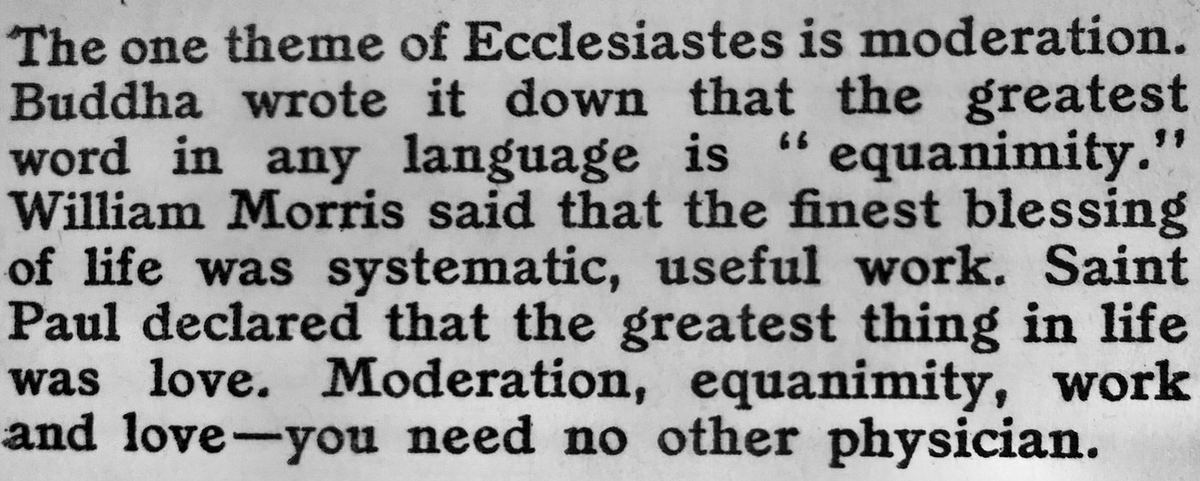
Moderation, equanimity, work and love—you need no other physician.
A bee alone can make no honey.
If all men hoed a little, no man would have to hoe all the time.
To escape criticism: Do nothing, say nothing, be nothing.
Four materials, one per source: oak with copper bands for Roycroft, whitewash for Erdner, book paper for Hubbard, plum for mine.
The Shop
What I make by hand, and what I have built at scale.
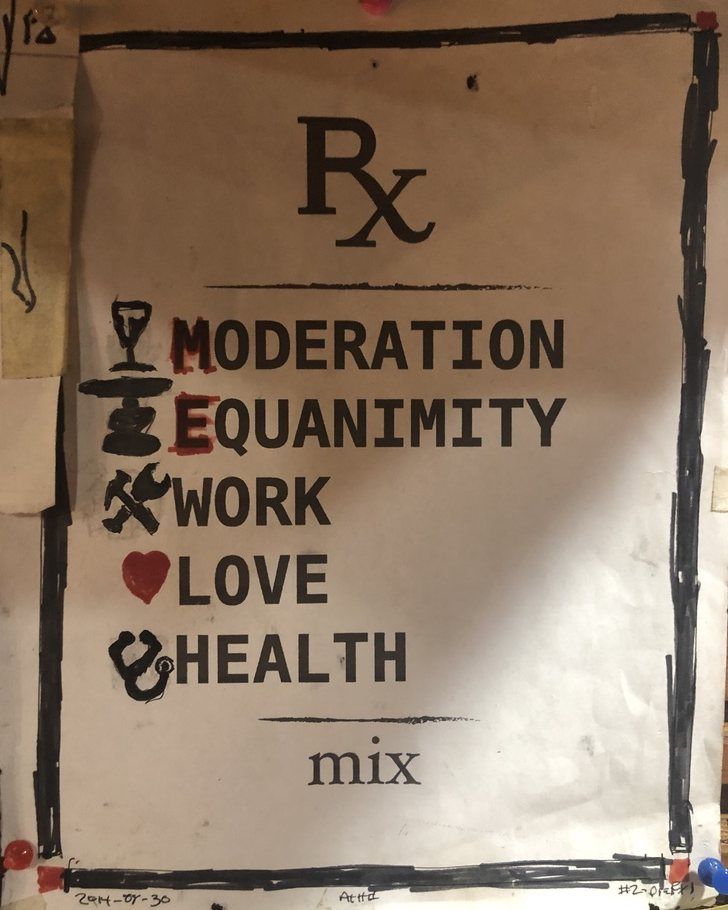
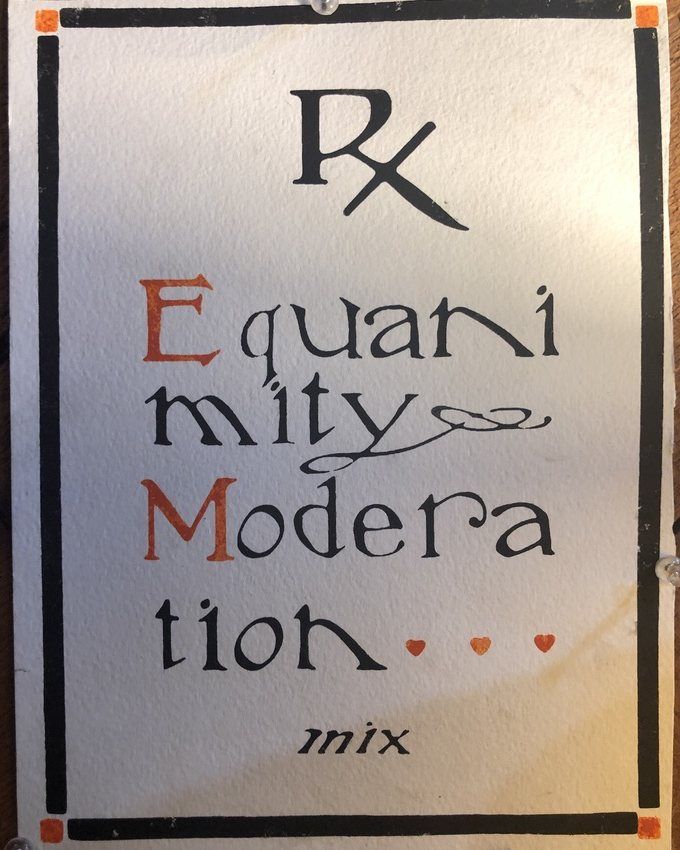
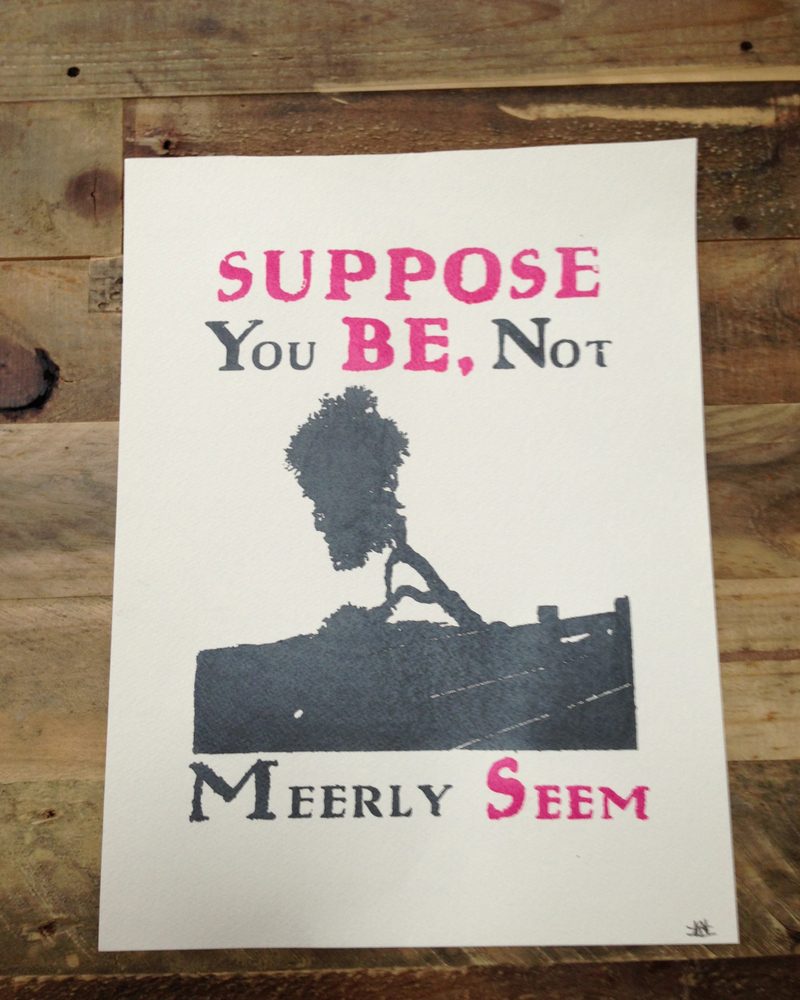
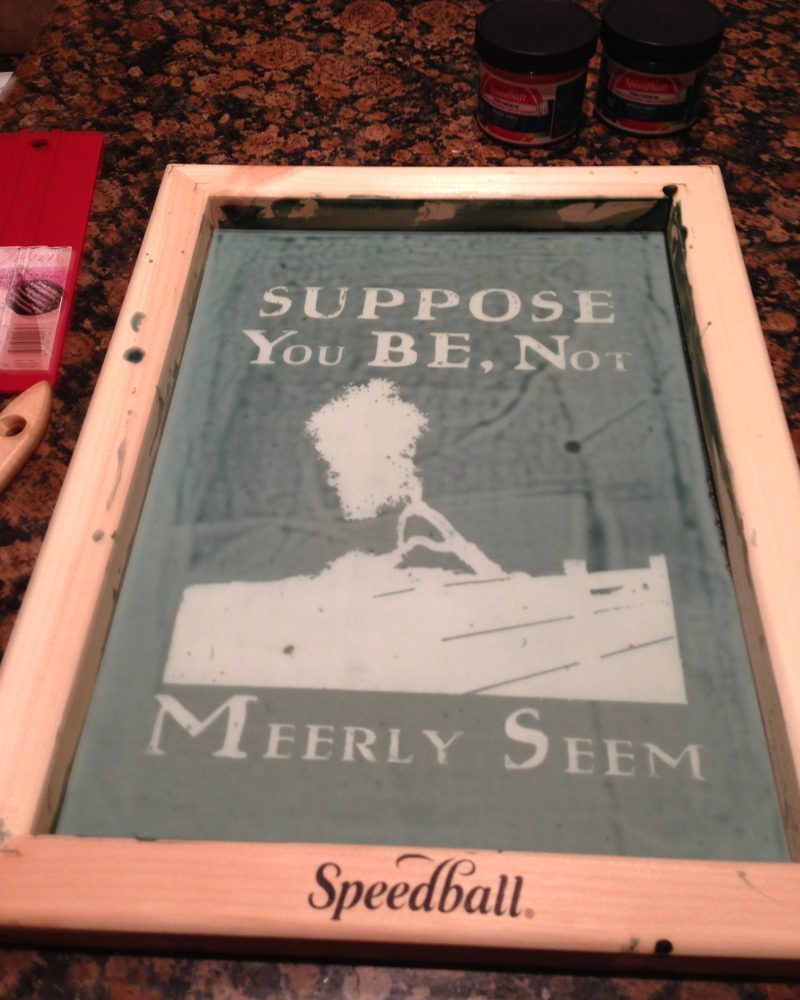
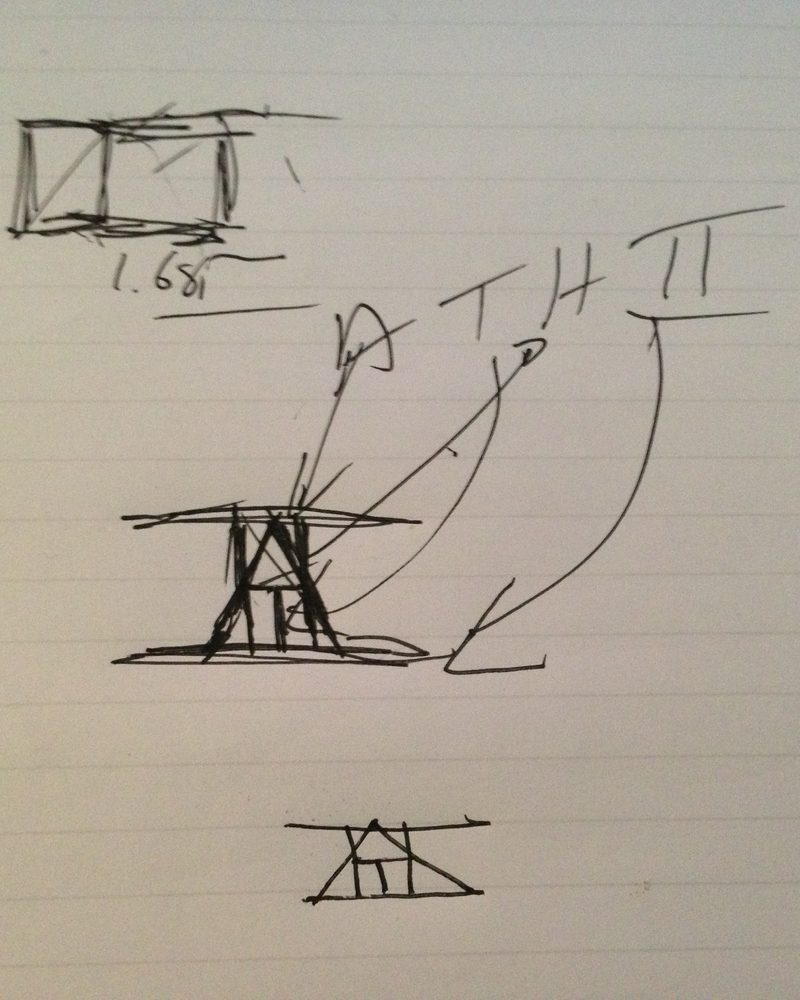
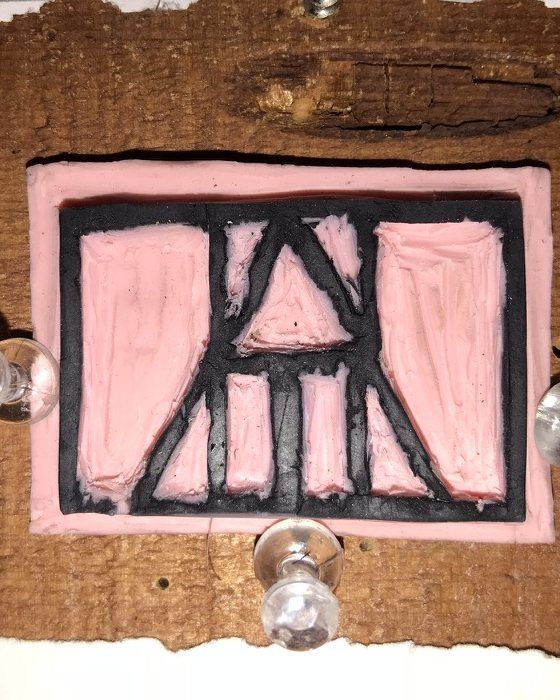
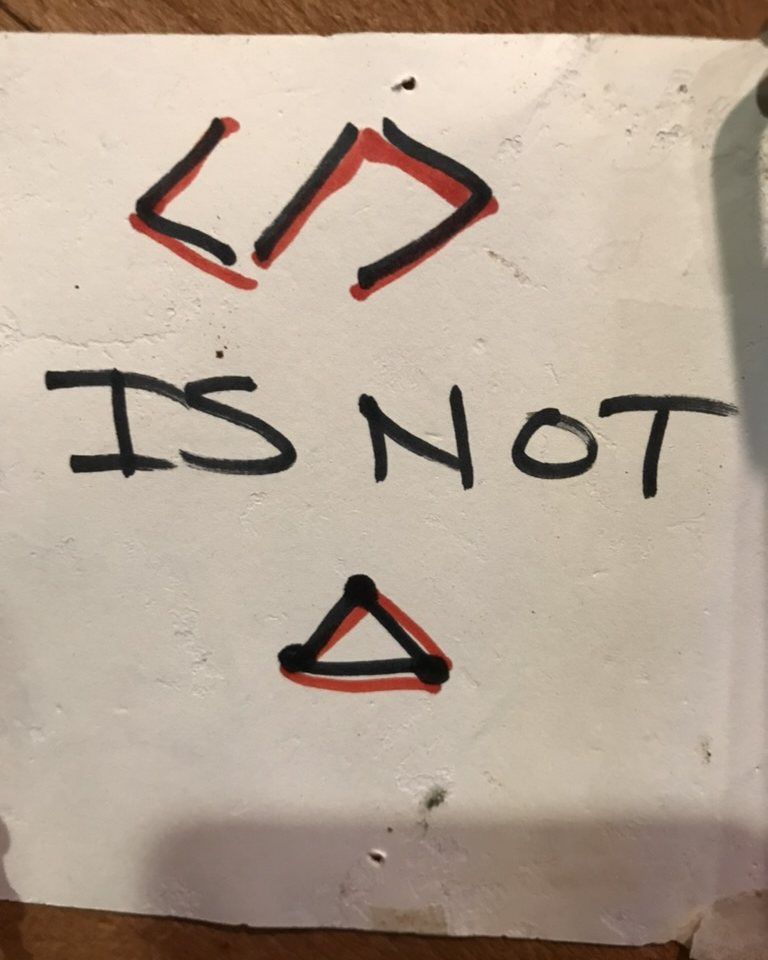
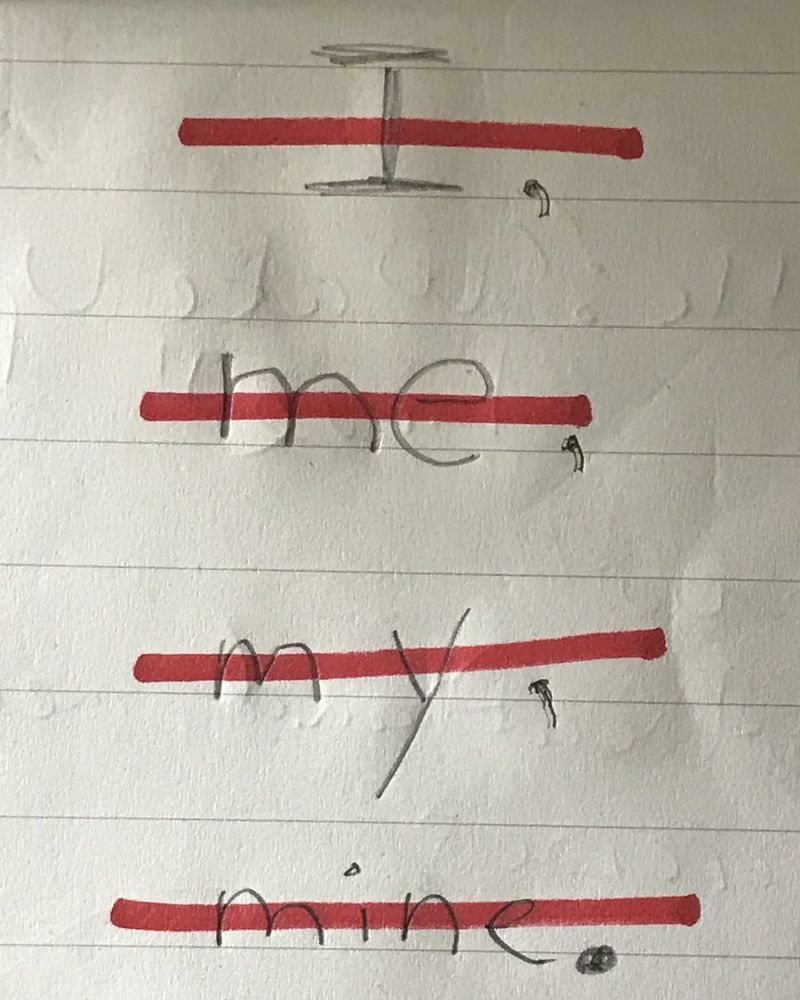
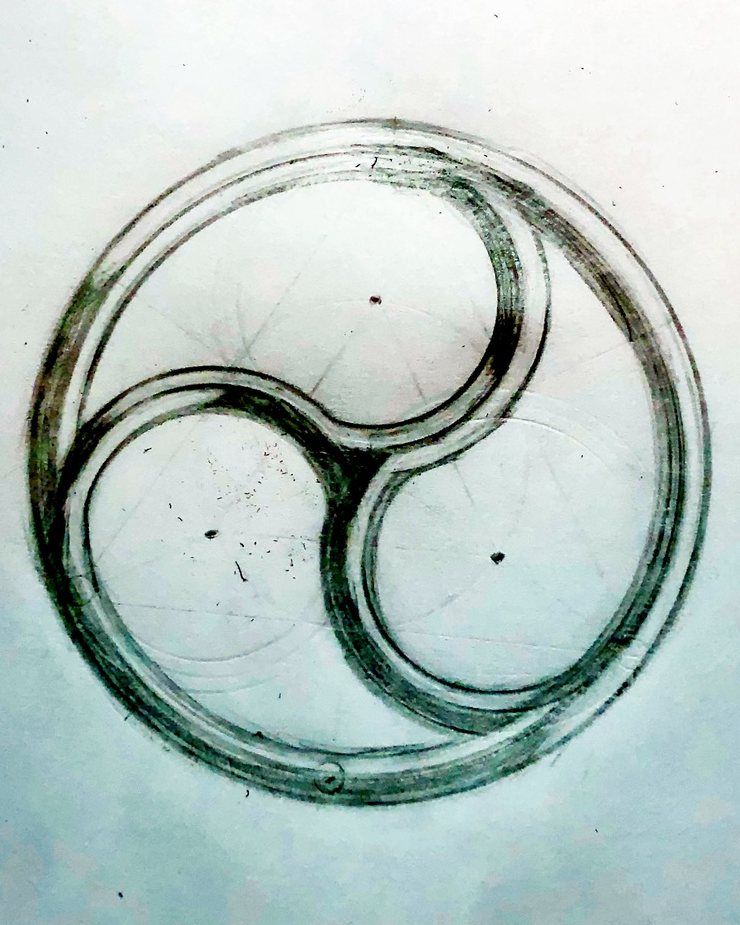
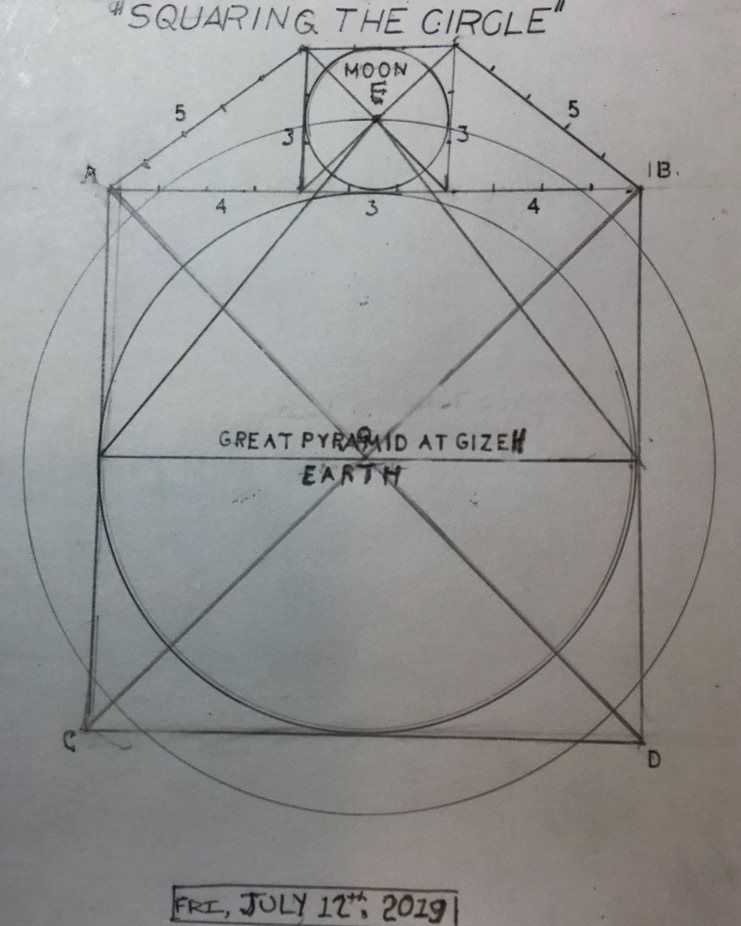
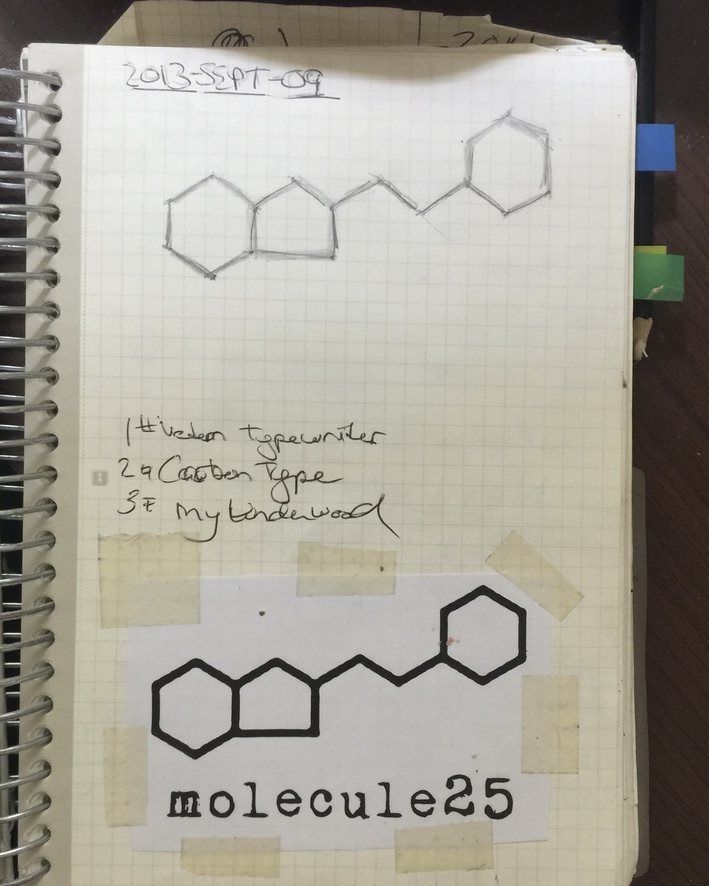
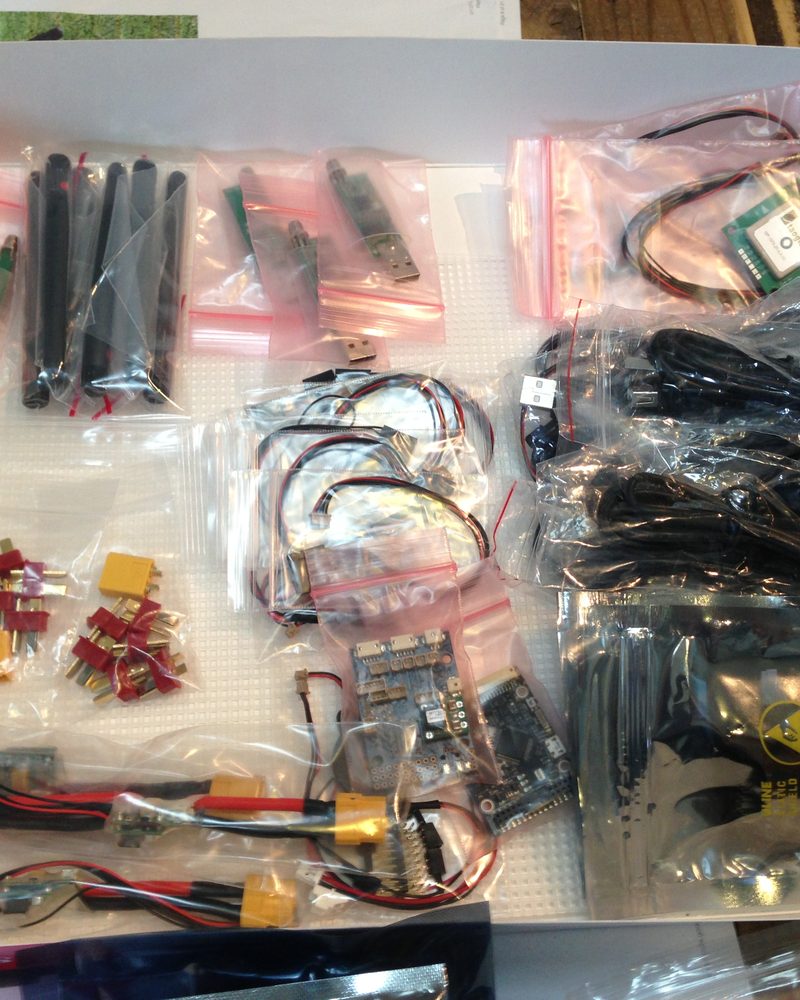
Cards slotted like the Eameses’ House of Cards, 1952. The photographs are Allen’s own.
Built at scale
The record, kept like a ledger. The full story is in the working biography.
| Years | Where | What |
|---|---|---|
| 2023 to now | Basis Worldwide | Senior Solutions Architect. I design and build multi-agent AI systems whose specialists plan, write and review code. |
| 2020 to now | HurffHaus | Founder. This house, and the campus to come. |
| 2018 to 2020 | AT&T and DIRECTV, Imbellus, Johnson Controls | DevOps and DevSecOps, as solutions architect, lead and senior engineer. |
| 2016 to 2017 | Datapipe | Senior development manager. Co-inventor on US Patent 10,691,514 B2. |
| 2010 to 2016 | Pose, Science Inc., Zuma Ventures | Co-founder and CTO of Pose and of Zuma Ventures. Entrepreneur in residence at Science. |
| 2005 to 2009 | MySpace | Executive Vice President of Engineering. Helped architect and scale the platform to 7.2 million concurrent users, and built an organization of more than 280 people. Chairman of the OpenSocial Foundation. On stage in the 2008 Google I/O keynote. |
| 1998 to 2003 | AltaVista, Experian | Manager at AltaVista. Senior engineer at Experian Consumer Direct. |
| The 1990s | Tidal Wave Communications | My first company. |
| 1984 | An IBM PCjr | Christmas. Where it starts. |
Set like a ledger: years, place, work. Every row is on the record.
The Hearth
Where I come from, and where the sayings come from.
The Jersey Tomato People
My great-grandfather, Edgar F. Hurff, was born in 1878 on a farm near Swedesboro, New Jersey. In 1901 his landlord talked him into planting watermelons late, in June, so he would have melons to sell when other growers had none. He grew a bumper crop, but an early cold spell killed the market and left him with a field of ripe melons. The president of the Landreth Seed Company saw the field and offered to buy the seeds if Edgar would save them. The next year he started harvesting seed, and his work with Landreth lasted until he sold his seed business in 1945.
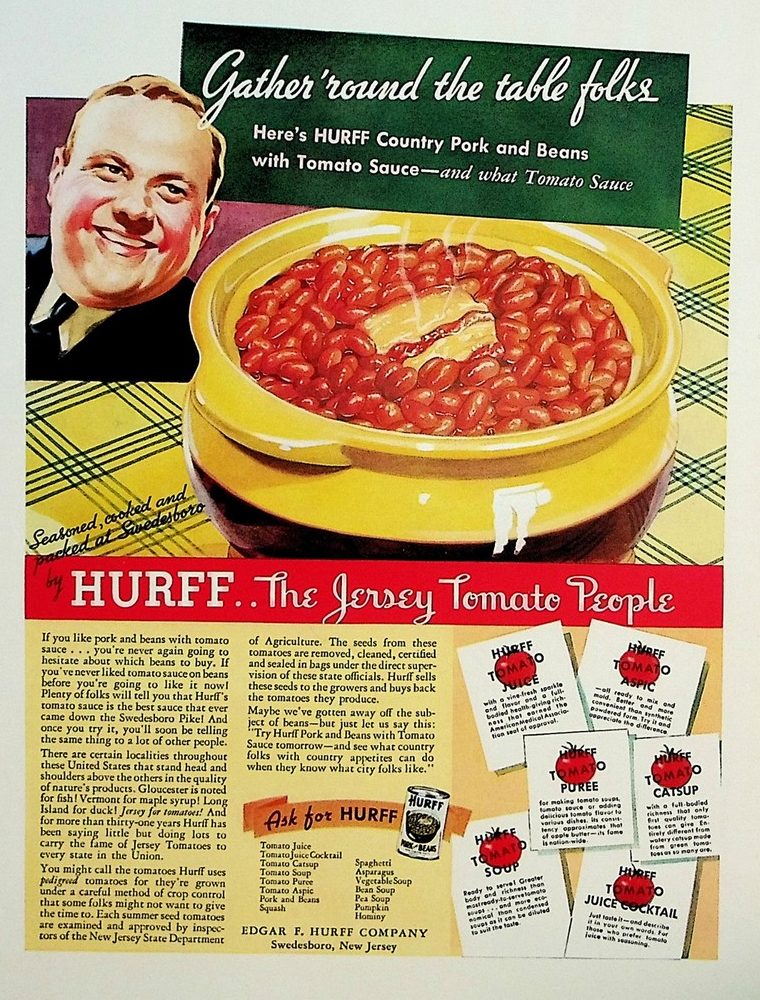
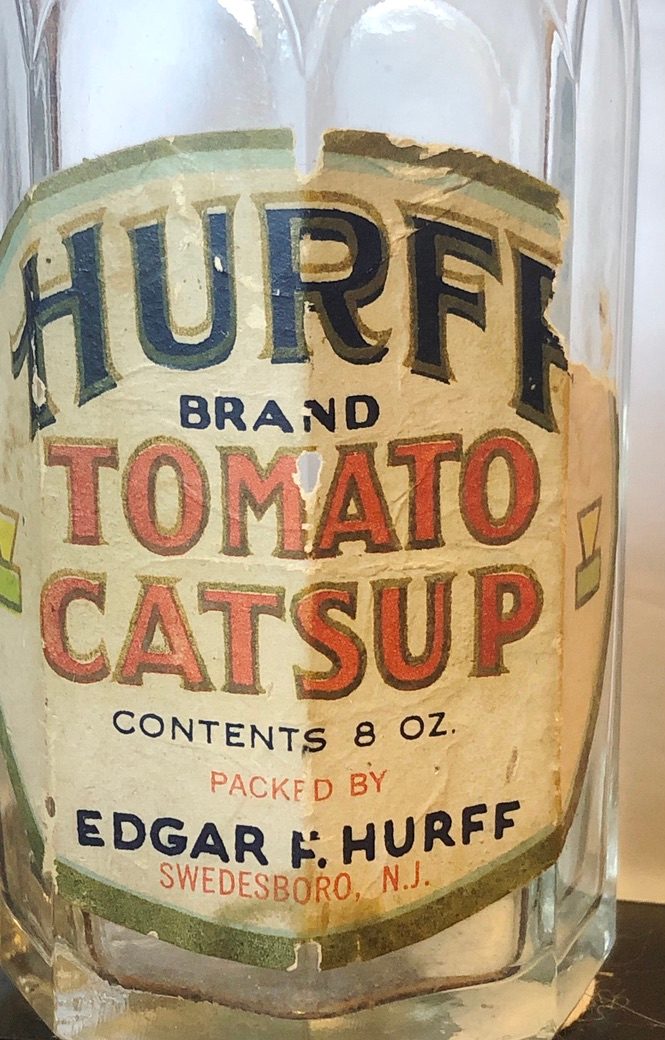
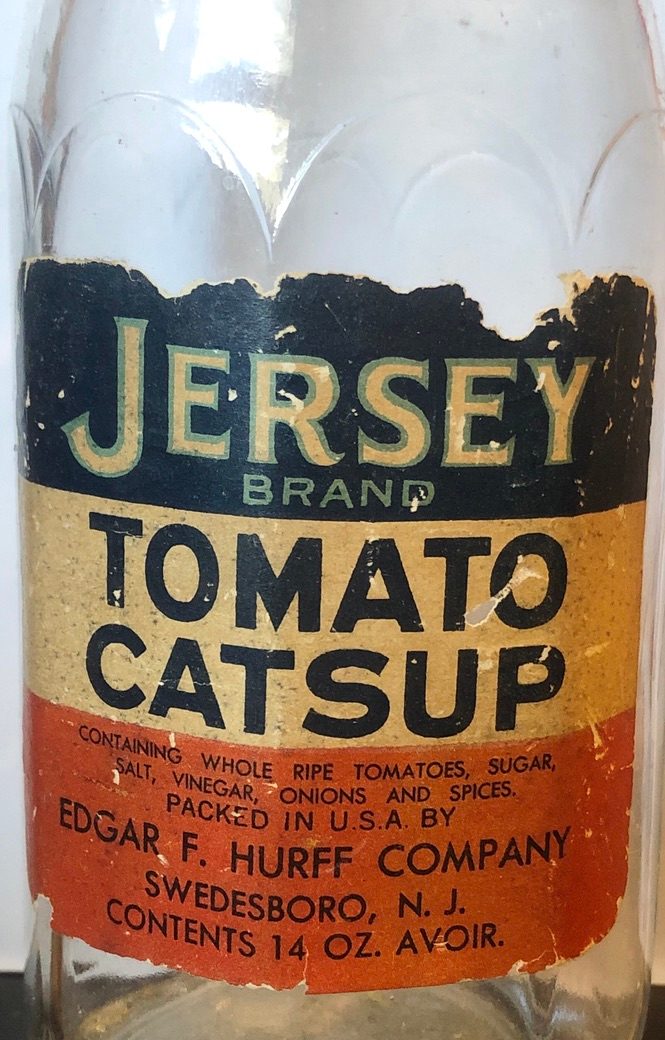
In 1913 he bought a property at Water and Third Streets in Swedesboro and started canning. That first year, with about 40 workers, he put up 25,000 five-gallon cans of tomato pulp. The company grew to employ more than 1,500 people in summer. Its ads and store signs called it Hurff, The Jersey Tomato People.
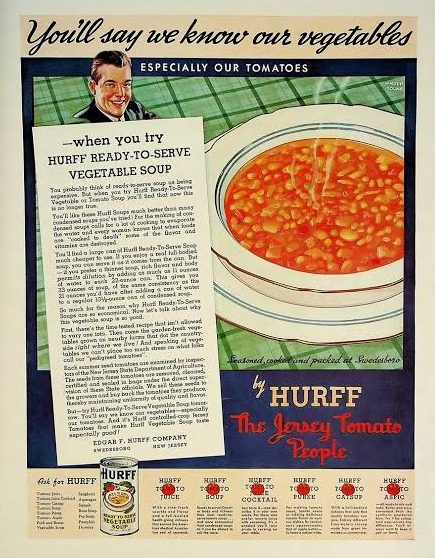
Hurff’s advertisements explained how the tomatoes were kept consistent. Each summer, inspectors from the New Jersey State Department of Agriculture examined and approved the seed tomatoes. The seeds were cleaned, certified and sealed in bags under their supervision. Hurff sold that seed to its growers and bought back the tomatoes they grew. The ads called them “pedigreed” tomatoes.
In 1941 Edgar sold the canning business to his son Allen, my grandfather, and to J. Oscar Hunt. Hunt sold it to California Packing, the Del Monte company, in 1948. Edgar died in 1973.
Edgar’s wife was Elizabeth Turner Hurff. My grandfather was Allen Turner Hurff. I carry his name, and the two posts in my mark can be read as the II.
Sources: Bill Cozens, “From Humble Farmer to Multi-Millionaire,” New Town Press, first printed in 2007 and reprinted in 2023; Edgar F. Hurff’s seed price lists, 1910 to 1942, in the USDA National Agricultural Library; and the advertisements below.
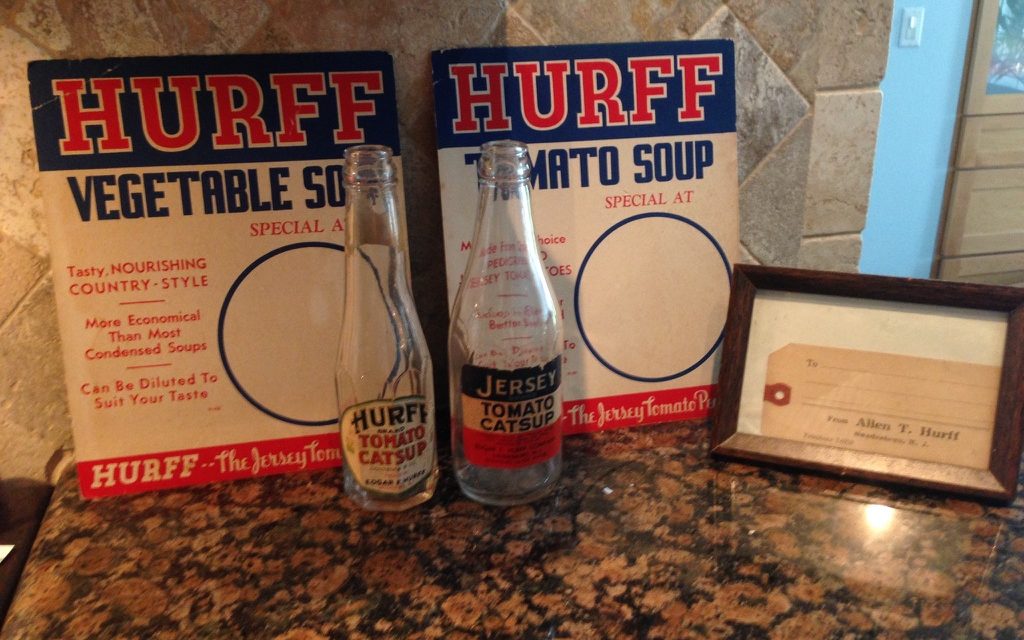
“Hurff sells these seeds to the growers and buys back the tomatoes they produce.”
Erdner’s walls
Between my grandparents’ houses in Swedesboro and Woodstown stood Earl Erdner’s canhouses, warehouses for the same South Jersey canning trade. Erdner had their white walls lettered with sayings in black Old English, about 170 of them by one newspaper’s count around 1960. Anyone who did business with him could hand him a saying for the wall, and an art teacher from Bridgeton repainted them every summer.
I passed those walls driving between my grandparents’ homes. Someday I want to paint sayings on the sides of buildings. For now there is the wall at the top of this page.
My great-grandfather on my mother’s side, Sedgwick Rusling Leap, owned a copy of Elbert Hubbard’s The Book of Business, printed by the Roycrofters in 1913. One passage in it became my Rx motto.
A pantry shelf in oak. The bottles, signs and tag are from Allen’s photographs; the two advertisements are scans of the printed pages.
The Campus
What this house is becoming.
Roycroft was a working town in East Aurora, New York: a print shop, a bindery, furniture, copper and leather shops, a farm, a bank and an inn, with more than 500 people at its peak. It lasted because it was a business.
HurffHaus will be a campus like that for liberal artists, technologists, thinkers, doers and robots. For-profit on purpose. This website is its first building.
How we build, in order
- Question every requirement. Make it less dumb.
- Delete any part or process you can.
- Simplify and optimize.
- Accelerate cycle time.
- Automate, last.
After Elon Musk’s five-step algorithm, as told in Walter Isaacson’s Elon Musk, 2023.
“Design depends largely on constraints.”
“We want to make the best for the most for the least.”
Colophon
How this house is made.
This house speaks in three voices. The book is Sorts Mill Goudy, Barry Schwartz’s revival of Frederic Goudy’s 1915 Goudy Old Style. The wall is Grenze Gotisch, a hybrid of roman and blackletter, after the black Old English letters on Erdner’s walls. The machine is IBM Plex Mono. My first computer was an IBM PCjr.
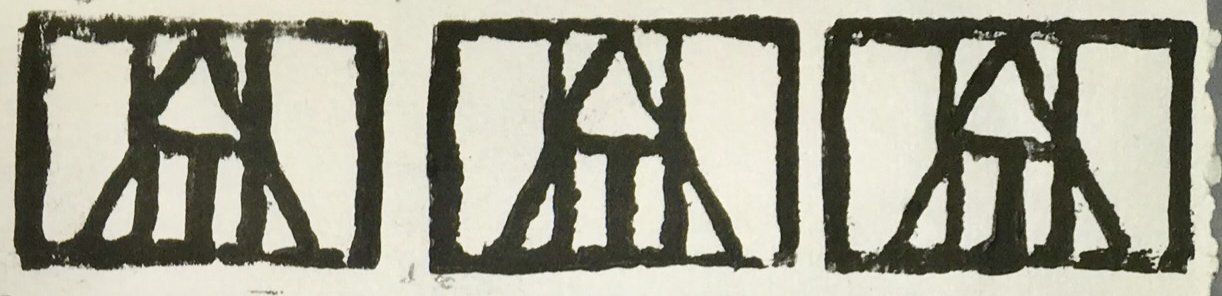
The colors come from my palette study for the mark: plum, mauve, stone, apricot, coral and orange. The facade borrows the Eames House’s steel frame and colored panels and is proportioned by the golden section. It is drawn from the mark itself: swing the leg of the A on a compass and it sets the width of the house. Turn on Construction to see it.
Machines are welcome guests. Every page publishes structured data for them, and every saying carries its citation. Switch the reader to Machine to see a page the way an agent does.
Done into a website by Allen Turner Hurff II at his shop in Baltimore, Maryland, in the year 2026.
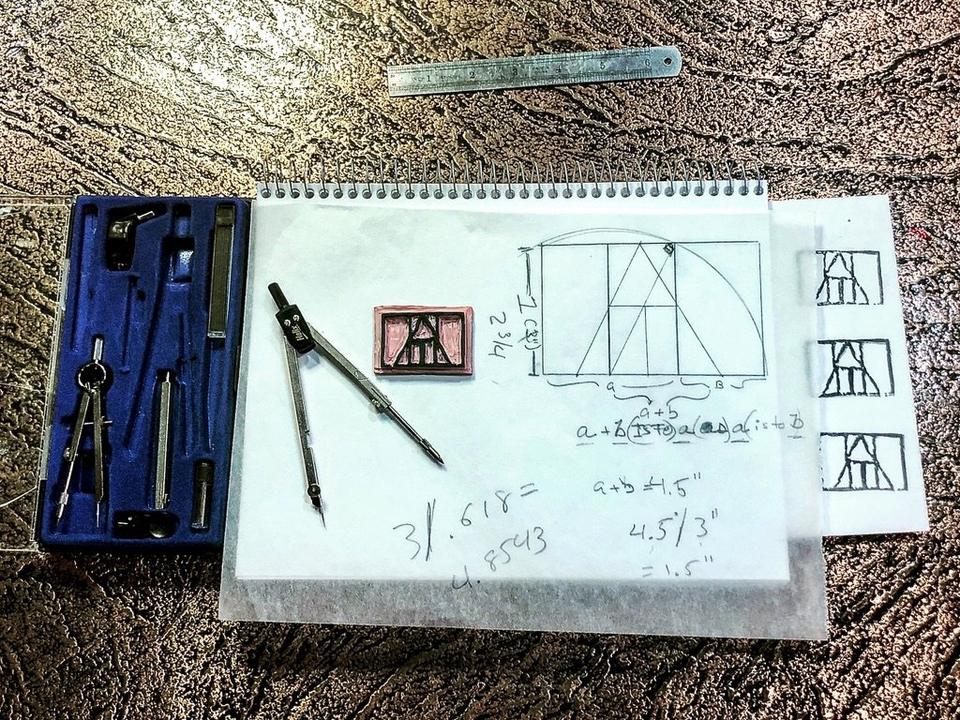
After the Roycroft colophon: “Done into a Book by The Roycrofters at their Shop, which is in East Aurora, Erie County, New York.”